


At the backdrop of celebrating women this Women’s Month, we explore three sectors in South Africa that have the potential to empower women through mass employment and entrepreneurial skilling.
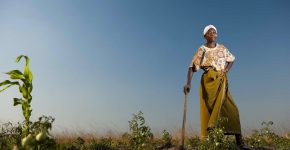
First is the Agricultural sector. Agriculture is one of the largest GDP-contributing sectors in the country, and its strong rebound of 17% from the third quarter of 2023 to the last quarter (which boosted overall GDP by at least 0.4%) demonstrates ample and ripe territory for economic development in the sense of employment and entrepreneurship. Given that over 44% of households in South Africa are women-led, most of which is comprised of rural areas in the Eastern Cape and Kwa Zulu Natal regions, this industry is positioned to steer more support for women in agriculture through vigorous training, easily attainable resources, and open markets for the trade of crops and animal products.
Second is the Renewable energy sector. Women are set to benefit from the opportunities posed by the need for innovation and supply in the renewable energies sector, which includes solar power generation and biomass amongst others. Examples to draw from include the success of Jaza Energy in Tanzania that provides employment opportunities for women to create accessible energy solutions in their communities. Likewise, organizations such as Ino Biodiesel founded by Mahlatse Mamaila in South Africa during the COVID pandemic, tackles energy needs and empowers informal vendors by transforming used cooking oil from local restaurants into biodiesel and supplying it to mining companies and construction firms.
Third is the Technology sector. The ICT industry has been growing significantly over recently times in South Africa, with its contribution to GDP projected to be around 15% – 20% in 2025 largely driven by e-commerce and cloud computing. Currently, women in South Africa only account for roughly 23% of the tech sector, highlighting a need for more female penetration into the industry – this is a necessity for a country stifled by a female unemployment rate of over 35%. Furthermore, initiatives in the tech industry should encourage more female participation in the STEM fields (Science, Technology, Engineering, and Mathematics) and improve information accessibility in underdeveloped communities.
By implementing targeted initiatives into these sectors, the journey to optimal economic development may be realized more rapidly. It must be noted, however, that without concerted efforts to eliminate barriers that deter women entrepreneurs and labour participation, such as access to finance, markets and growth support services, these sector-specific aspirations may run dry and futile.
Sources:
https://www.statssa.gov.za/?p=18124 : 2025. SA Economy grows in the fourth quarter.
https://www.statista.com/statistics/1129142/unemployment-rate-by-gender-in-south-africa